
Fire Suppression Systems
Engineered fire suppression solutions designed around hazard classification, protected-area requirements, detection interfaces, agent/water delivery, control logic, discharge protection, testing and lifecycle maintenance.
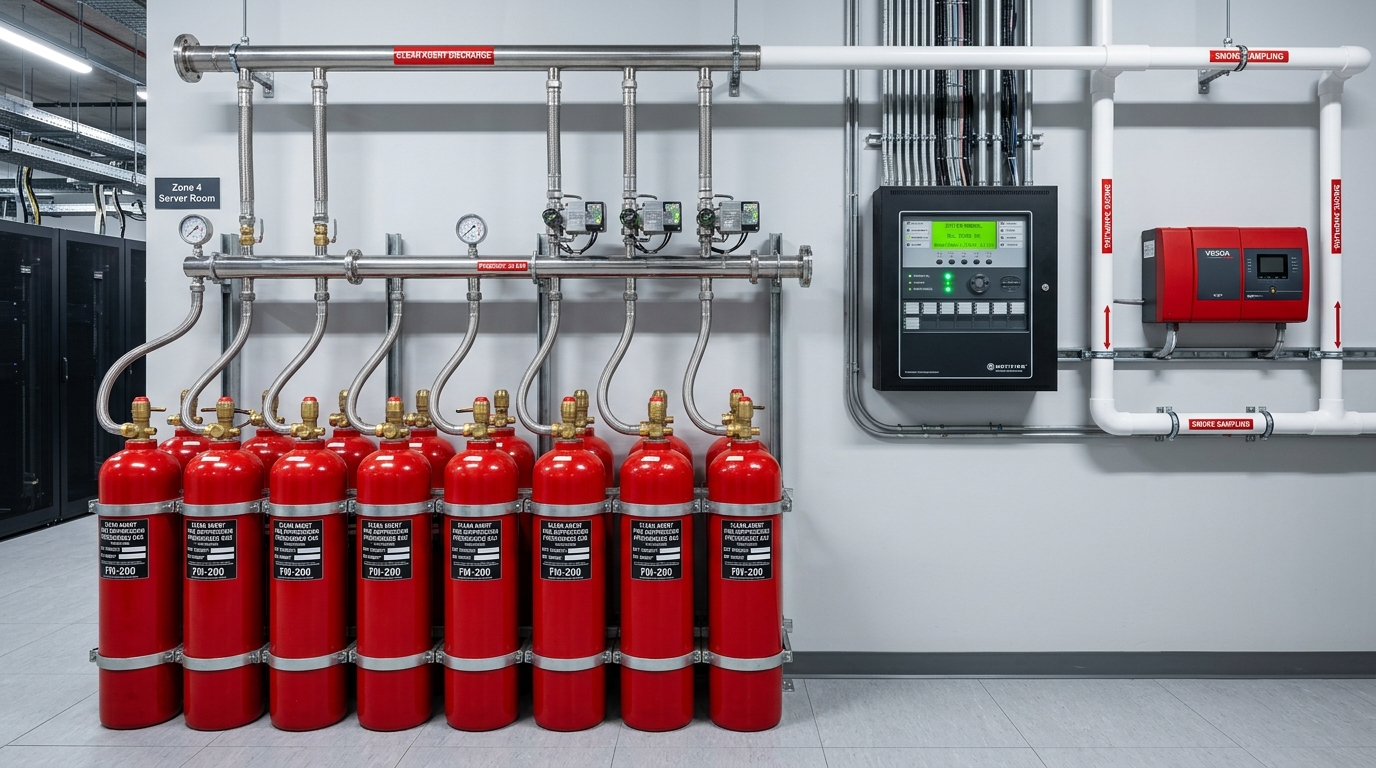
Engineered Subsystem Scope & Architecture
HORNET INFOTECH provides comprehensive engineering for automatic fire suppression infrastructure. From initial hazard classification and hydraulic coordination to distribution piping, valve assemblies, detection/release interlocks, and BMS supervisory monitoring, every suppression system is engineered for dependable containment.
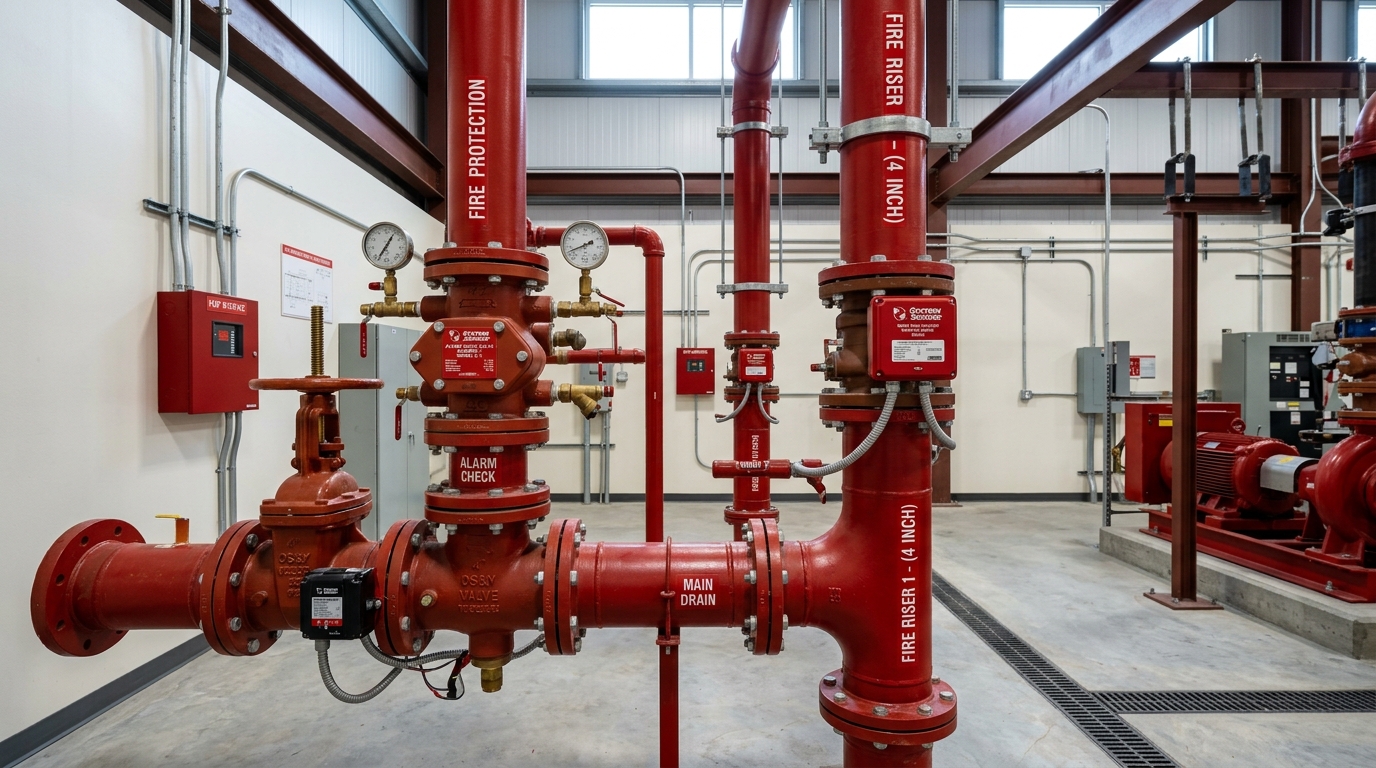
Hazard identification, protected-area risk classification, suppression technology selection (wet-pipe, dry-pipe, pre-action, deluge, or specialized suppression), hydraulic calculation modeling, and equipment layout planning coordinated with building MEP infrastructure.
Engineered automatic sprinkler networks, zone control valve assemblies with supervised flow and tamper switches, floor hydrant and hose reel stations, fire department connections (FDC), and fire pump skid integration where applicable.
Supervised releasing circuits, detection and release interfaces for applicable suppression systems, pressure switches, and project-specific cause-and-effect logic.
Hydrostatic pressure testing of distribution headers, main drain and inspector test valve flow verification, alarm valve dry/wet cycling, pump churn and full-flow performance testing, authority handover documentation, and scheduled preventive maintenance AMC.
Suppression Integration with the HORNET Ecosystem
Engineered suppression integrates hydraulic engineering, automatic detection interfaces, release actuation, and supervisory telemetry. HORNET coordinates every stage subject to applicable codes and project design.
Hazard Assessment
Evaluation of occupancy fire loading, hazard classification, protected volume, and combustible material profile.
Detection & Initiation
Thermal bulb rupture, cross-zoned smoke/heat sensors, linear heat detection cables, or manual release where applicable.
Suppression Control
Suppression releasing panel or alarm interface executes pre-discharge countdown, interlocks, and solenoid actuation.
Suppression Delivery
Automatic fire pump cut-in, pressure tank supply, or approved suppression agent release into delivery headers as designed.
Distribution
Schedule steel distribution piping, supervised OS&Y valves, alarm check valves, and calibrated spray heads or nozzles.
Alarm & Monitoring
Waterflow switch activation, water motor gong, valve tamper switch supervision, and central fire alarm/BMS telemetry.
Emergency Interfaces
HVAC AHU shutdown, smoke damper closure, access control fail-safe door release, and lift recall as designed.
Deployment Environments & Hazard Protections
Every facility architecture imposes unique fire-loading profiles, occupancy hazards, spatial constraints, and statutory requirements. HORNET engineers suppression systems tailored to specific building typologies.
Corporate & Commercial Buildings
Wet-pipe sprinkler networks, floor zone control valve assemblies, riser distribution with supervised flow switches, internal hose reel stations, and basement car park pre-action or deluge arrangements where applicable.
IT / ITES & Technology Campuses
Pre-action sprinkler infrastructure in electrical riser shafts, double-interlock systems guarding technical plant rooms, centralized fire pump coordination, and clear demarcation from clean-agent data suites as designed.
Manufacturing & Industrial Facilities
High-density deluge systems for raw material warehouses, medium/high velocity water spray systems for outdoor oil-filled transformers and flammable storage, deluge valve stations, and external yard hydrant networks.
Healthcare Facilities & Hospitals
Quick-response concealed sprinkler heads across patient wards and public concourses, dry-pipe systems protecting unheated ambulance bays, supervised isolation valves, and low-acoustic discharge coordination.
Government & Institutional Campuses
Multi-building campus hydrant distribution mains, sectional isolation valves, and fire pump and power-system coordination with supervisory monitoring, as designed.
Mission-Critical & Data Facilities
Cross-zoned detection release coordination, pre-action sprinkler systems over critical utility mechanical rooms, localized suppression solutions for specific electrical hazards where required by the project design, and integrated drainage and water containment coordination.
Detailed Technical Specifications in Preparation
Comprehensive fire suppression datasheets, hazard classification reviews, protected-area assessments, valve schedules, distribution piping layouts, and equipment Bill of Quantities (BOQ) are engineered by our technical team based on client architectural drawings and statutory authority requirements.
Related Life Safety & Security Solutions
Addressable optical and thermal detection, multi-loop panels, manual call points, and synchronized notification integrated with suppression initiating loops.
Clean-agent gaseous extinguishing (Novec 1230 / FM-200 / Inergen) engineered for mission-critical server halls, UPS battery rooms, and zero-residue data infrastructure.
Automated video bookmarking, thermal verification, and camera pop-ups triggered on waterflow switch or suppression supervisory events for visual assessment.