
BMS & Building Automation
Integrated Building Management Systems for supervisory monitoring, HVAC control, energy management, plant interfaces and coordinated building automation across commercial, institutional, healthcare, hospitality, industrial and critical facilities.
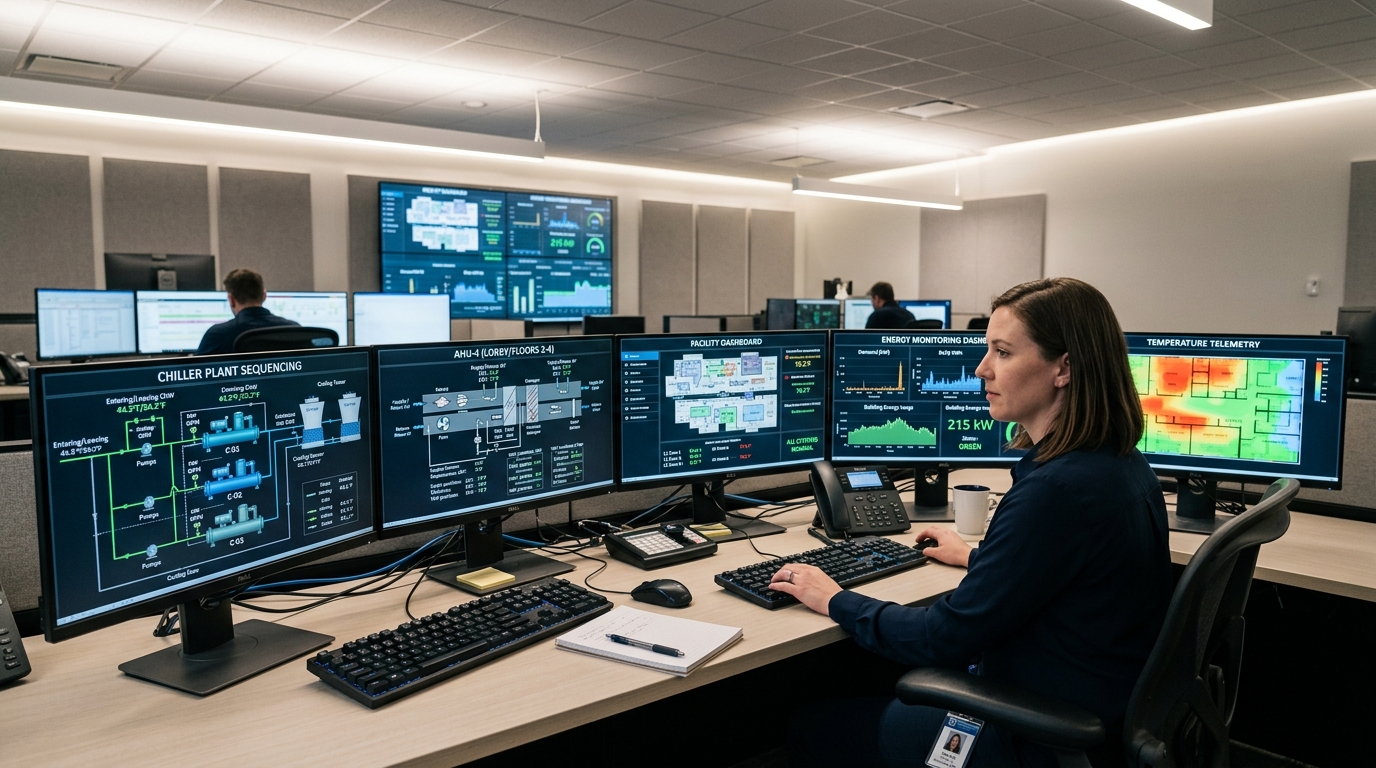
Integrated Building Management & Controls Infrastructure
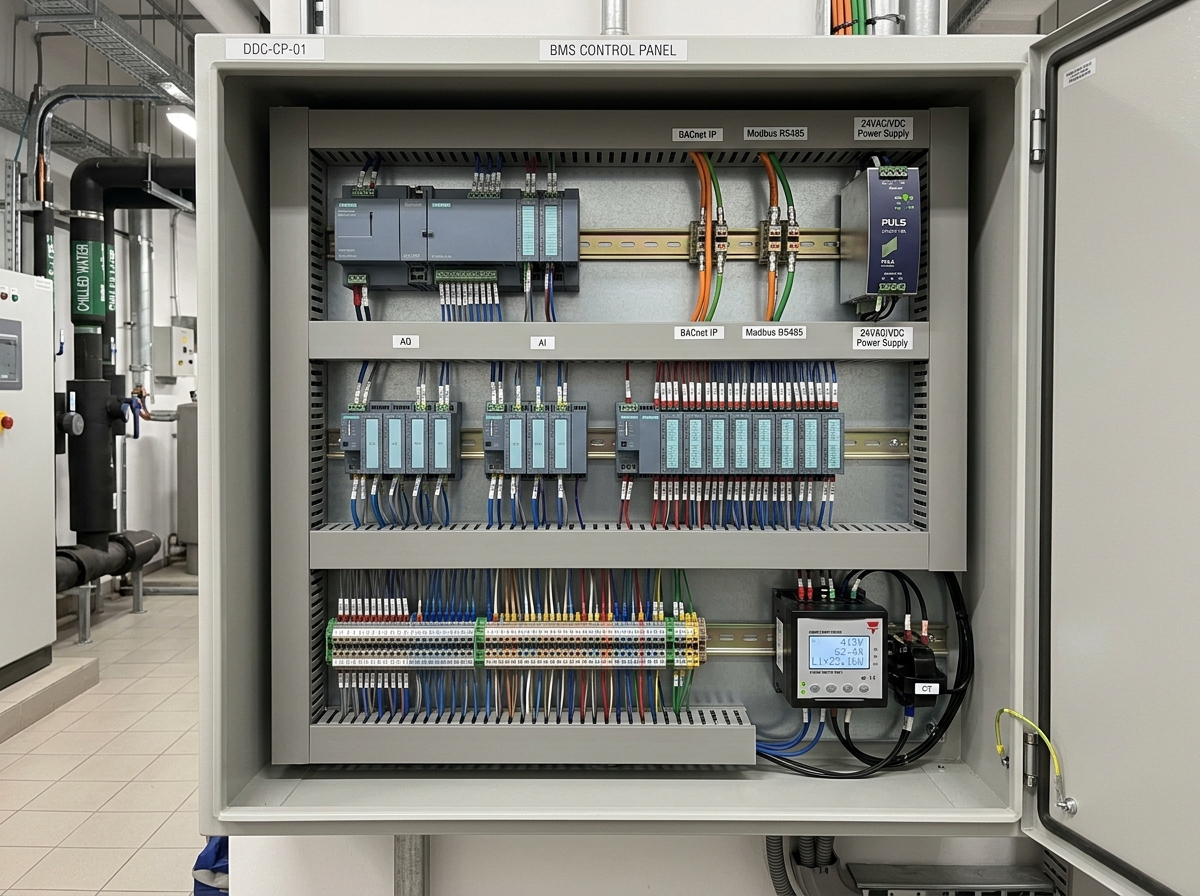
HORNET INFOTECH designs, installs, and commissions vendor-neutral building management systems. From field-level temperature sensors, flow meters, and precision valves to Direct Digital Controllers (DDC), automation networks, and centralized supervisory servers, we engineer robust automation tailored to your facility’s mechanical and electrical operational profiles.
AHU and FCU monitoring and control, chiller and cooling plant interfaces, temperature and humidity telemetry, equipment run/trip status monitoring, automated operating schedules, setpoint regulation, and plant sequencing where designed.
Integration of multi-function energy meters, electrical distribution parameter monitoring (voltage, current, power factor), power-quality data where supported, lighting and load monitoring, and centralized energy dashboards with consumption reporting.
Distributed DDC and controller integration, user-configurable automated operating schedules, dynamic setpoint management, multi-level alarm and event routing, interactive graphical floor and mechanical plant schematics, and long-term trend logging where required.
Coordinated interfaces with fire alarm panels where required (damper control/AHU shutdown), access control systems where required, CCTV event triggers where applicable, water-leak detection, and status monitoring for elevators, diesel generators, and modular UPS systems where designed.
7-Stage Building Automation Ecosystem
From field instrumentation and distributed DDC panels to high-speed automation networks, central supervisory servers, and multi-system facility integrations, each architectural layer delivers structured operational oversight.
Field Sensors & Meters
Immersion/duct temperature sensors, humidity transmitters, static differential pressure gauges, water flow meters, and multi-function energy meters.
Controllers / DDC
Direct Digital Controllers (DDC) with modular universal I/O, native PID loop execution, localized fail-safe logic, and 24VAC/DC power distribution.
Automation Network
RS-485 MSTP trunks, BACnet/IP building networks, Modbus TCP gateways, and fiber-optic backbone uplinks configured with robust surge isolation.
BMS Server / Supervisor
Enterprise BMS server engine hosting real-time point databases, automated scheduling engines, trend log historians, and multi-protocol normalization.
Graphics & Alarms
Interactive 2D/3D dynamic floor plans, schematic HVAC plant diagrams, real-time setpoint toggles, multi-tier alarm escalation, and event notification.
Operator Workstations
Dedicated engineering workstations, SOC video-wall clients, browser-based secure web access, and role-based audit-trailed maintenance consoles.
Integrated Building Systems
Project-specific interfaces with fire alarms, access control, CCTV, lifts, diesel generators, modular UPS, and third-party facility management tools.
Operational Environments & Facility Profiles
BMS engineering adapts to each facility's mechanical complexity, life-safety requirements, operational duty cycles, and energy monitoring requirements across varied building typologies.
Corporate & Commercial Buildings
Centralized supervisory control of multi-floor VAV systems, primary AHUs, occupancy-based comfort scheduling, electrical tenant sub-metering, and unified facilities operations.
IT / ITES & Business Parks
High-density campus environments requiring continuous power-quality tracking, chiller plant sequencing, redundant DDC field networks, and multi-tenant energy allocation dashboards.
Healthcare Facilities
Hospitals and surgical centres requiring critical pressure gradient control (isolation rooms/OTs), precise humidity and temperature stabilization, and rapid air-handling alarm escalation.
Hotels & Hospitality
Luxury hotels and resorts balancing guestroom energy management (GRMS interface where specified) with central boiler, chiller, kitchen ventilation, and public area ambient air regulation.
Manufacturing & Industrial Facilities
Production plants and cleanrooms demanding ruggedized industrial Modbus/BACnet I/O modules, compressor monitoring, exhaust scrubber tracking, and continuous electrical sub-station monitoring.
Government / Institutional Campuses
Public administration campuses and universities requiring robust on-premises supervisory servers, distributed DDC panels across multiple structures, and long-term historical data archives.
Detailed BMS Specifications & Engineering Design Review
HORNET INFOTECH provides comprehensive pre-bid engineering, schematic review, and vendor-neutral technical BOQ formulation tailored to building automation and supervisory monitoring specifications.
• Communication protocols (BACnet/IP, BACnet MS/TP, Modbus RTU/TCP, or KNX) are implemented where applicable and supported by target mechanical and electrical equipment.
• HVAC direct control vs. high-level monitoring interfaces depend on equipment manufacturer controllers and project specifications.
• Interfaces with fire alarm, access control, CCTV, elevators, generators, and UPS systems are project-specific and subject to engineered design requirements.
Related Facility, Power & ICT Solutions
Industrial Ethernet switches, building automation VLAN segmentation, fiber backbones, and secure IP transport for BACnet/IP and supervisory telemetry.
Precision cooling (PAC), environmental monitoring, cold-aisle containment, and central BMS server rack housing with continuous environmental oversight.
Dedicated cause-and-effect relays, AHU trip signals, stairwell pressurization fan triggers, and smoke damper control integration where designed.
Modbus TCP/RTU telemetry, battery autonomy monitoring, phase balancing data, and emergency backup power for DDC panels and BMS supervisory servers.
Automated video call-up on plant alarm conditions, critical plant-room access surveillance, and synchronized security and facility oversight.